Friday, April 22, 2011

Happy little Henbane & White Sage Seedlings!

Yay!  The stratification worked and I now have a few Henbane and White Sage Seedings!  Oh joy.

They are still very tiny, but hopefully you will at least get a look at them for future reference. 

I am still waiting to get started on the community garden.  The opening day was this past weekend, but due to lots and lots of rain in this area, they are unable to plow the field so we can get our crops going.  And I just know how the weather works here in Philly,  we get tons of rain in the spring, and then we will be dying of heat and humidity all summer.  Can't wait.

My computer is getting worse, crashing on me more and more.  I'm trying to get a few things done before I take it to the shop.  I expect to take it in for repairs within a few days, so if I suddently stop posting for several days, you'll know what happened.  It will take a minimum of three weeks to get it back, but I hope to post a few articles from the library.   Those geeks should give us loaner computers, like they do with cars.  Hey Best Buy!  Take a hint!

Henbane seedings, still very tiny.


Henbane, fresh out of the fridge after 2 weeks


White Sage seedings


Thursday, April 21, 2011

Busy busy busy

Over the last few days I've been busy trying to keep my seedlings alive, the delayed opening of the community garden has been frustrating, I had to re-pot some of my seedlings that were getting too big for their little jiffy pellet starters.  My computer is getting worse, and that is a big concern, I have a lot to do online and this will be a terrible set-back for me, having to send it off to the shop for three weeks. Bloody hell.   Good thing I thrive on adversity.  Some good news is that the Henbane and White Sage seeds that I put in the fridge last month have been removed and some have already sprouted.  I'll throw up some photos of them tomorrow, if the computer doesn't die first. 

Wednesday, April 20, 2011

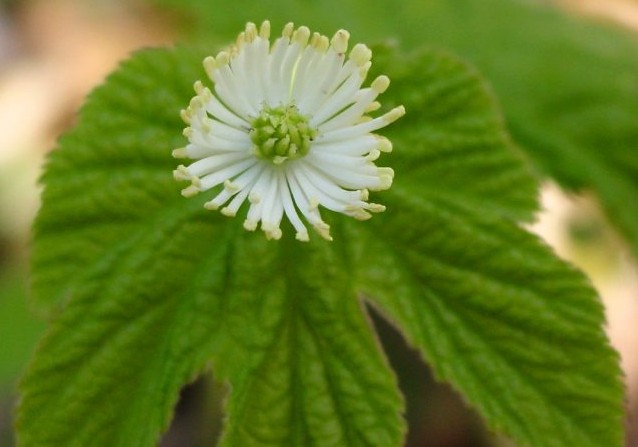
Hydrastis canadensis - Golden Seal

Hydrastis canadensis - Goldenseal  also know as Yellow Root, Orange Root,. Yellow Puccoon,. Ground Raspberry, Wild Curcuma, Turmeric Root, Indian Dye, Indian Paint, Eye Root, Eye Balm, Jaundice Root, and Warnera, is a perennial herb in the buttercup family, though its leaves and fruit resemble those of the Raspberry.  The generic name of the plant, Hydrastis, is a Greek word meaning "to accomplish with water," probably given it from its effect on the mucous membrane.

The plant is a native of Canada and the eastern United States, the chief States producing it being Ohio, Kentucky, West Virginia, Indiana, New York and in Canada, Ontario.  Goldenseal produces a drug which is considered of great value in modern medicine.

It is a small perennial herb, with a horizontal, irregularly knotted, bright yellow root-stock, from 1/4 inch to 3/4 inch thick, giving off slender roots below and marked with scars of the flower-stems of previous years. The flowering stem, which is pushed up early in the spring, is from 6 to 12 inches high, erect, cylindrical, hairy, with downward-pointing hairs, surrounded at the base with a few short, brown scales.  It has two veined and wrinkled dark green, hairy leaves, placed high up, the lower one stalked, the upper stalkless, roundish in outline, but palmately cut into 5 to 7 lobes, the margins irregularly and finely toothed. 

The flower, which is produced in April, is solitary, terminal, erect and small, with three small greenish-white sepals, falling away immediately after expansion, no petals and numerous stamens. The fruit ripens in July and is a small, fleshy, oblong, crimson berry, much like a Raspberry in appearance, but is not edible.

Goldenseal's principal ingredients are the alkaloids hydrastine and berberine. Berberine is found in many Asian medicinal plants.  Ellingwood's American Materia Medica lists Goldenseal as being useful for disorders of the stomach, catarrhal gastritis, atonic dyspepsia, chronic constipation, hepatic congestion, cirrhosis, protracted fevers, cerebral engorgements of a chronic character, uterine subinvolution, in menorrhagia or metrorrhagia from the displaced uterus, post partum hemorrhage, catarrhal, ulcerating, aphthous, indolent and otherwise unhealthy conditions of mucous surfaces, leucorrhea, gallstones and breast swellings associated with the menses. 

Externally, it is used in the treatment of eczema, ringworm, pruritis, earache and conjunctivitis. It my be used as a mouthwash for gum disease and mouth ulcers, as a douche for vaginal problems, as eardrops for middle-ear inflammation and congestion, and as a snuff for nasal inflammation.

Goldenseal may be purchased in salve, tablet, tincture form, or as a bulk powder. It is often used to boost the medicinal effects of other herbs it is blended or formulated with.  It is very bitter, which stimulates the appetite and aids digestion, and often stimulates bile secretion.

CAUTIONS :  Adverse reactions are known in hypoglycemics and should not be used.  It should not be taken for an early stage Upper Respiratory Infection (URI), or if there are more chills than fever, and reserved for illnesses in which there is yellow or green phlegm. Generally a two week maximum dosage is suggested. Taking Goldenseal over a long period of time can cause imbalances of intestinal flora and contribute to yeast and mold infections, reduce absorption of B vitamins and immune system imblances.   Hydrastis stimulates the involuntary muscles of the uterus and should be avoided during pregnancy and lactation. It is not recommended for children.  It should also be avoided with gastrointestinal inflammation, and with proinflammatory disorders.

Early American settlers learned the virtues of Goldenseal from the Natives, who used the root as a medicine and its yellow juice as a stain for their faces and a dye for their clothing.  Some tribes considered goldenseal a sacred herb, and used it extensively as a paint applied to their faces, horses and weapons during ceremonial dances before going to war. It was believed by the early settlers that if they destroyed all the yellowroot the Indians would not attack because they could not paint themselves.  The Cherokee used it as a cure for  indigestion, local inflammations  to improve the appetite and to cure cancer; the Iroquois used it for whooping cough, liver disorders, fevers, sore throats, eye infections, ulcers, arrow wounds and heart problems.

Goldenseal has become a part of American folklore associated with chemical testing.   Two studies have demonstrated that goldenseal has no effect on urine drug tests over the use of water alone. Subjects who drank large amounts of water had the same urine drug levels as subjects who took goldenseal capsules along with the water.  Because of the popular perception that Goldenseal clears the system, drug tests take the presence of  hydrastine into consideration as an indicator that the person being tested is a drug user.  It has also been used on occasions in this century, without success, to attempt to mask the use of morphine in race horses.

Growing Goldenseal is not for the casual gardener, however, if you are the kind of person who likes a real challenge, read on.

It is illegal to harvest Goldenseal from the wild.  Goldenseal is an Endangered Species due to overharvesting and habitat destruction.  The only remaining stands of wild goldenseal are isolated in the northern and central Appalachians and the Ozark mountains.  Wild Goldenseal is so rare that the herb is listed in the Convention on International Trade in Endangered Species of Wild Fauna and Flora.  Many herbalists urge caution in choosing products containing goldenseal, as they may have been harvested in an unsustainable manner as opposed to having been organically cultivated.

Goldenseal is a woodland plant requiring roughly the same conditions as American Ginseng.  It requires shade and rich, well drained soil typical of deciduous forests. It will not grow under coniferous trees and does not like high humidity or high heat. It will not survive greenhouses during the summer. It will not grow in southern areas where humidity and heat are extreme.  Some organic American goldenseal is grown in approved propagation sites in North Carolina and Tennessee and there are various retailers online who can sell you plants, seeds and roots.  Check in your area about the legalities involved.

Some states require a permit  to cultivate or propagate goldenseal; roots, rhizomes, and seeds must be shown to have came from legally acquired parental stock and that the plants were cultivated for four years or more without augmentation from the wild.

Goldenseal is difficult to cultivate, the best conditions for its cultivation are well-drained soil, rich in humus, in a partially shaded situation.  Lath blinds (placed overhead on wires and light runners) are used by American cultivators.  Studies have shown that the best growth has occurred under 63% to 80% shade. The root-stocks are divided into small pieces and then planted about 8 inches apart in rows. Seeds are not considered reliable. The best success with goldenseal will probably be obtained in areas where goldenseal is native. Success in other areas will depend on how well those conditions can be duplicated.


Planting on a slight slope will improve drainage. Do not plant in a bottom or in a heavy, poorly drained soil. If growing in the forest, look for a site where there are other woodland plants growing such as mayapple, trillium, bloodroot, and black cohosh. Do not select a site where there is no undergrowth because it is probably too dark for goldenseal.  Conversely, try to avoid sites where the undergrowth is particularly thick, such as in a rhododendron thicket, for the effort required to remove the plants and their roots would be too costly.  A site with mixed, deeply rooted hardwoods is preferred to a solid stand of conifers or other shallow rooted trees which can compete with the goldenseal for moisture and nutrients.  Plantings established under oak, poplar, walnut, and basswood have been successful.


Resources include:


Wikipedia:  http://en.wikipedia.org/wiki/Main_Page
College of Agriculture & Life Sciences NCSU:  http://www.ces.ncsu.edu/depts/hort/hil/hil-131.html
Alternative Nature Online Herbal:  http://www.altnature.com/


Monday, April 18, 2011

Update on my use of Valerian extract

Last week I mentioned that I have started using Valerian extract to help with stress and promote sleep.  Just wanted to update you on my progress. 

So far, so good.  I have noticed that I am, indeed, feeling calmer since I have been using the Valerian. It did take a few days for it to kick in, thou.  I started with a dietary suppliment that was formulated for children becaue that was all I could get ahold of quickly.  That particular formula also had other herbs mixed with it, probably to help with the taste, since Valerian is not a very pleasant tasting herb.  The other herbs were Wood Betony, Chamomile, Fennel seed and Hops, it also contained coconut oil and citric acid. 

I now have "Herb Pharm" brand Valerian extract, made from fresh (undried) rhizome and root, certified organically grown with a base of certified organic grain alcohol.  They also have a Valerian Glycerite version.  It's a one ounce bottle, but, unlike the last one, this contains only Valerian.  Directions say to use 30-40 drops in water from two to five times daily.  Personally, I have no trouble taking a squirt from the dropper straight up. 

The store clerk warned me to get ready for the "stinky feet" smell, but honestly, it doesn't smell that bad to me.  Sure, it smells like a medicine, but I wouldn't go so far as to say "phew" when smelling it.

The effect that I have noticed the most, so far, is the ability to fall asleep much easier.  I have also noticed less stress and will continue to monitor my reaction to this herb and will report on it again in a week or two.


Friday, April 15, 2011

Filipendula ulmaria - Meadowsweet

Filipendula ulmaria - Meadowsweet, also known as Queen of the Meadow, Pride of the Meadow, Meadow Wort, Meadow Queen, Lady of the Meadow, Dollof, Meadsweet and Bridewort.

The fragrant Meadowsweet is one of the best known wild flowers, it was previously called Spiraeae ulmaria, and the term aspirin comes from this name. The name ulmaria means elmlike, but it does not resemble the elm (Ulmus) in any way. However, like slippery elm bark, the plant contains salicylic acid, which has long been used as a painkiller, and this may be the source of the name.

The generic name, Filipendula, comes from filum, meaning "thread" and pendulus, meaning "hanging." This name possibly came due to the root tubers that hang on fibrous roots. Meadowsweet grows in damp meadows. It is native throughout most of Europe and Western Asia. It has been introduced and naturalized in North America. The stems are 3–7 ft tall, erect and furrowed, reddish to sometimes purple. The leaves are dark green on the upper side and whitish and downy underneath, divided, interruptedly pinnate, having a few large serrated leaflets and small intermediate ones.

Meadowsweet has delicate, graceful, creamy-white flowers clustered close together in handsome irregularly-branched cymes, having a very strong, sweet smell. The flowers gives off a pleasant wintergreen scent while the leaves smell of a sweet almond fragrance.  They flower from June to early September.  It's leaves are commonly galled by the bright orange rust fungus Triphragmium ulmariae which creates swellings and distortions on the stalk and mid-rib.  The Meadowsweet Rust gall develops as a chemically induced swelling, arising from the lower surface of the Meadowsweet leaves.

Filipendula is a food plant for hoverflies, bees and the caterpillars of numerous moths. Its seeds provide food for birds.  The whole herb possesses a pleasant taste and flavour, the green parts having an almond scent, leading to the use of the plant as a strewing herb.  It was also used to flavour wine, beer and many vinegars. The flowers can be added to stewed fruit and jams, giving them a subtle almond flavor.  Dried, the flowers make lovely pot pourri. 

Orange rust fungus gall
on Meadowsweet leaf
 Meadowsweet has many medicinal properties, it contains several powerful salicylates, salts derived from salicylic acid that are chemically similar to aspirin but do not cause stomach bleeding. And, unlike aspirin, Filipendula has a positive effect on the digestive system, it protects and soothes the mucous membranes of the digestive tract, reducing excess acidity and alleviating nausea. 

It can be used in the treatment of heartburn, hyperacidity, gastritis and peptic ulceration.  It is also effective against the organisms causing diphtheria, dysentery and pneumonia. When when the root is peeled and crushed, it smells like the antiseptic Germolene, and when chewed  it relieves headaches.  The anti-inflammatory action of Filipendula makes it effective against rheumatic pain without the adverse effects which can cause gastric bleeding (aspirin can cause gastric ulceration), it also acts to reduce fever.
It is effective on its own as a treatment for diarrhea. The flowers, when made into a tea, are used to treat flu sufferers. The astringent tannins in Filipendula make it a useful remedy in the treatment of diarrhoea in children.  In Germany, it is used as a supportive treatment for common colds.  It is also recommended for water retention and for bladder and kidney ailments.  Externally the infusion can serve as a wash for wounds or inflamed eyes.

Cautions:  Filipendula contains the chemicals used to make aspirin. One in five people with asthma also have Samter's triad, in which aspirin induces asthma symptoms. Asthma sufferers should be aware that meadowsweet, with its similar biochemistry, could theoretically also induce symptoms of asthma.  This plant should be avoided by those with a hypersensitivity to salicylates. If the tincture is to be used to treat gastric ulceration or excess acidity, the alcohol content, which might otherwise irritate the gut, can be reduced by adding it to boiling water.

Meadowsweet, water-mint, and vervain were three herbs held most sacred by the Druids. It has been found with the cremated remains of three people and at least one animal in a Bronze Age cairn at Fan Foel, South Wales. Similar finds have also been found inside a vessels from Ashgrove and North Mains, Scotland. These could possibly indicate honey-based mead or flavoured ale, or alternatively might suggest the plant being placed on the grave as a scented flower.  In Welsh Mythology, Gwydion and Math created a woman out of oak blossom, broom, and meadowsweet and named her Blodeuwedd ("flower face"). 

In folklore there are claims that where Meadowsweet grows, there are no snakes nor evil nearby.  In divination, the plant was laid on water on St John’s Day to reveal a thief – a woman if it floated, a man if it sank.  A Russian folktale tells of Kudryash, the bravest knight in his village, who one day became terrified of his own death and could no longer fight.  When a band of thieves attacked the village, Kudryash ran away. Ashamed, he prepaired to drown himself in the river. But a beautiful maiden emerged from the water to stop him and gave him a garland of Meadowsweet flowers. She said he would be unharmed if he wore it in battle. He returned to the village, wore the garland and defeated the thieves.

Meadowsweet is known by many other names, and in Chaucer's The Knight's Tale it is known as Meadwort and was one of the ingredients in a drink called "save."  It was also known as Bridewort, because it was strewn in churches for festivals and weddings, and often made into bridal garlands. In Europe, it took its name "queen of the meadow" for the way it can dominate a low-lying, damp meadow. In the 16th century, when it was customary to strew floors with rushes and herbs (both to give warmth underfoot and to overcome smells and infections), it was Queen Elizabeth I's favorite strewing herb.  Gerard believed it outranked all other strewing herbs because its aromatic leaves didn’t cause headaches, unlike many other strongly scented leaves. 

Throughout history, meadowsweet maintained its usefulness in the home. Housewives used the plant in their cleaning routine, drying clusters of tiny white florets and placing them on the floor and in cabinets to mask unpleasant odors. Cooks used the herb to flavor beers, meads and wines and added it to soups for an interesting almond flavor.  The fresh leaves can be used to flavor sorbets and fruit salads. Infuse the flower to make a mild diuretic tea, let it steep to bring out the salicylic acid before serving.  As a cosmetic, it was soaked in rainwater and used as astringent and skin conditioner.

Ancient Celts used the plant as a dye from which black was obtained from the roots, the leaves produce a blue pigment and yellow is obtained from the plant tops.  An essential oil obtained from the flower buds is used in perfumery.

Seed is best sown in the autumn in a cold frame. The seed can also be sown in a cold frame in spring, germinating best at a temperature of 10-13C. When they are large enough to handle, prick the seedlings out into individual pots and plant them out in the summer if they have grown enough. If not, keep them in a cold frame for the winter and plant them out in late spring. Division should be done in autumn or winter. Larger clumps can be replanted directly into their permanent positions, though it is best to pot up smaller clumps and grow them on in a cold frame until they are rooting well, then plant them out in the spring.


Meadowsweet is a good candidate to grow in moist meadows or near bodies of water, where the herb blooms from June through August. And while it can grow in a variety of situations, it does require some attention. It reacts well to heavy compost at least once each season.  And if leaves become tattered in the summer, severely prune them and keep soil moist until new leaves emerge.  The herb is collected in July, when it is in flower and can be dried for later use.


Resouses include: 


Wikipedia:  http://en.wikipedia.org/wiki/Main_Page
Purple Sage Medicinal Herbs:  http://www.purplesage.org.uk/
A Modern Herbal:  http://botanical.com/
LiveStrong.com:  http://www.livestrong.com/
Encyclopedia of Life:  http://www.eol.org/
The Herb Companion: http://www.herbcompanion.com/
Natural Medicinal Herbs:  http://www.naturalmedicinalherbs.net/
Ecological Flora of the British Isles:  http://www.ecoflora.co.uk/index.php